Manam Chocolate Just Raised $9 Million. Here's Why That Matters Far Beyond One Brand.
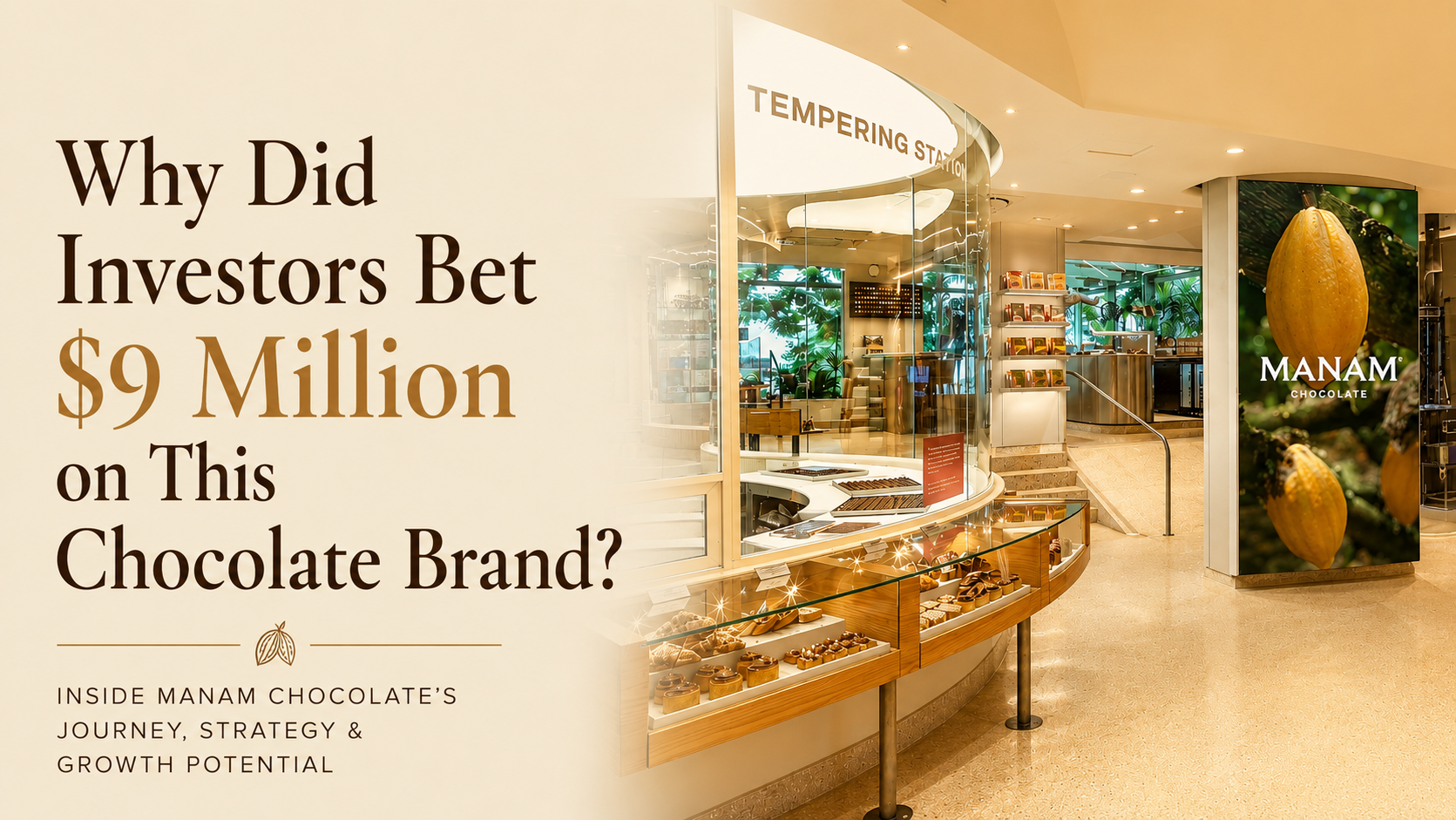
In June 2026, a Hyderabad-based chocolate company called Manam raised $9 million in Series A funding. The round was led by Omnivore, one of India's most respected agri-tech and food-systems investors, with participation from the Turner Morrison consortium.
On paper, it's a fundraise. In practice, it's one of the strongest signals yet that Indian craft chocolate has graduated from passion project to investable category.
Let's unpack why.
First, Who Is Manam?
Manam Chocolate was founded in 2021 by Chaitanya Muppala, a second-generation entrepreneur whose family runs Almond House — Hyderabad's iconic mithai chain, in business since 1989. Muppala is a graduate of the University of British Columbia's Sauder School of Business and a Stanford Seed Programme alumnus. He also happens to be India's first Level-3 Certified Chocolate Taster, credentialed by the International Institute of Chocolate and Cacao Tasting.
But Manam didn't start with a store. It started with a fermentary.
Years before launching its first chocolate bar, Muppala's parent company — Distinct Origins Private Limited — built a fine-flavour cacao fermentation facility in Tadikalapudi, in Andhra Pradesh's West Godavari district. The team spent three years working directly with farmers, identifying genetic limitations in Indian cacao, and developing post-harvest processing techniques to compensate for those gaps.
Today, Distinct Origins works with over 250 cacao farmers across Andhra Pradesh. The brand's retail arm, Manam Chocolate, launched in August 2023 — five years after that foundational work began.
That timeline matters. This isn't a chocolate brand that added a farm story for marketing. This is a farm operation that eventually became a chocolate brand.
A Track Record That Speaks Loudly
Within 100 days of launch, Manam won 17 awards at the 2023 Academy of Chocolate Awards in the UK — one Gold, ten Silver, five Bronze — and was named Overall Winner in the Brand Experience category, from among 1,400 global entries. The following year, it won again, across multiple categories for Indian-origin and international-origin tablets.
In 2024, TIME magazine named its flagship Karkhana in Hyderabad's Banjara Hills one of the World's Greatest Places.
These aren't vanity metrics. They indicate genuine consumer pull — the kind that makes investors pay attention.
Where the $9 Million Will Go
The money is going where the brand wants to be seen, touched, and tasted — new retail stores across India, starting with Delhi-NCR. The company has already opened its first outlet outside Hyderabad and plans to scale significantly over the next couple of years.
Beyond stores, the capital will support new product development, stronger manufacturing operations, and deeper investment in the supply chain that feeds it all — the farmer network and fermentation infrastructure in Andhra Pradesh.
Gifting has become the single biggest revenue driver for the brand, spanning corporate, festive, and personal occasions. The company also sells through its own website and quick-commerce platforms, but physical retail remains the backbone. The strategy is clear: let people experience the chocolate first, then scale distribution around that pull.
Why Omnivore Leading This Round Is Significant
Omnivore doesn't invest in lifestyle trends. It invests in food systems, agricultural supply chains, and climate resilience. Its portfolio is built around the conviction that lasting food brands must be anchored in defensible, farmer-partnered supply infrastructure.
Reihem Roy, Partner at Omnivore, framed it plainly: premium brands built on strong farmer partnerships demonstrate how origin-led value addition can improve farm-level livelihoods while reducing exposure to commodity-price volatility. And as climate pressure reshapes global cacao supply, investing in high-quality alternative origins like India is both a commercial opportunity and a contribution to a more resilient food system.
That framing is important. It means Omnivore isn't just betting on a consumer brand. It's betting on Indian cacao as a viable agricultural asset class — at a moment when the world's dominant cacao supply chain is under serious strain.
India's Chocolate Market: Small, But Moving Fast
According to estimates from Mordor Intelligence, IMARC Group, and Research and Markets, India's broader chocolate market is valued at roughly $2.5–3 billion as of 2025, growing at approximately 7–8% annually. Projections place it in the $4–5.5 billion range by the early 2030s — though estimates vary depending on how broadly each firm defines the category.
But the numbers that matter for Manam are in the premium and artisanal segment, which is still tiny — and growing much faster than the mass market. Indian consumers, especially in urban metros, are increasingly moving beyond basic milk chocolate toward higher cocoa percentages, single-origin bars, ethical sourcing, and experience-led purchases. Chocolates are progressively replacing traditional sweets as the preferred gifting choice during Diwali, Raksha Bandhan, and corporate occasions.
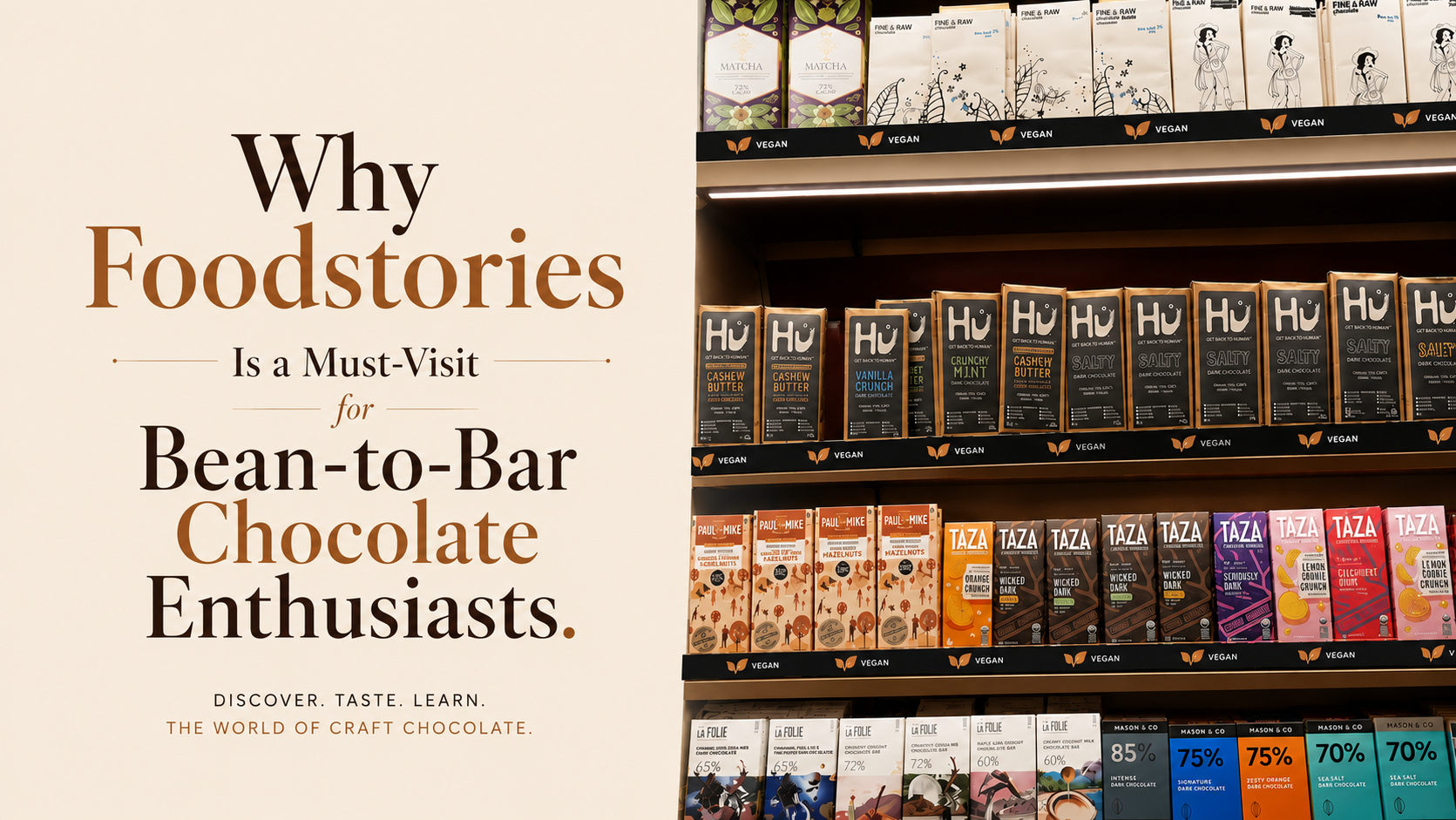
In the craft space, Manam competes with Kerala's Paul & Mike, Tamil Nadu's Mason & Co, and Rebel Foods-backed Smoor. Each has carved a distinct position. But none has attracted this level of capital from an agri-focused fund — a signal that Manam's backward integration into farming and fermentation is being valued as structural infrastructure, not just brand storytelling.
What Makes This Different From Most Food Fundraises
Three things stand out.
The investment thesis starts at the farm, not the shelf. Most food-brand funding rounds are evaluated on brand metrics — Instagram following, D2C conversion rates, repeat purchase frequency. This one was evaluated on farmer partnerships, fermentation IP, and supply-chain resilience. That's a fundamentally different lens, and it raises the bar for what craft-food founders need to show investors going forward.
The brand refused borrowed prestige. Muppala has been unusually direct about the fact that Indian cacao doesn't need to imitate European chocolate to be taken seriously. The "Belgian chocolate" mystique, he has argued, is a legacy of colonial commodity control — not an inherent quality marker. Manam's positioning is unapologetically Indian: Indian cacao, Indian farmers, Indian craft, global standards.
Big, immersive stores can actually work. Many people assume experiential retail is just an expensive way to look good. Manam's flagship earned a TIME "World's Greatest Places" nod within a year of opening, and gifting revenue far outpaced expectations. If the chocolate is worth the visit, the store pays for itself.
Honest Questions Ahead
No funding story should be read as a foregone conclusion. A few things worth watching:
What worked in Hyderabad may not work the same way in Delhi. Different city, different consumers, different costs. Replicating a destination store in a new market is never straightforward.
Global cocoa volatility is a double-edged sword. It makes Indian cacao strategically appealing — but it also means raw material costs remain unpredictable, even for a vertically integrated player.
Scaling from a beloved Hyderabad institution to a national premium brand requires different operational muscles — talent, logistics, consistency across locations — that have tripped up many food brands before.
The next 18 months, during which those 18 stores are supposed to materialise, will be the real proof point.
The Bigger Picture
For decades, "world-class chocolate" meant European. The supply chain was designed that way — cacao grown in the Global South, value captured in the Global North. India, despite being a cacao-growing country, was barely a footnote in the craft chocolate conversation.
That's changing. Not because of marketing. Because someone spent five years building a fermentary before opening a store. Because Indian-origin cacao is now winning at the same international competitions that were once dominated by European makers. And because a serious agri-tech investor just put $9 million behind the thesis that Indian cacao is a real, resilient, and scalable agricultural asset.
Manam's raise is a milestone — not because of the number, but because of what it validates.
The Indian chocolate story is no longer just beginning. It's underway.


Leave a comment
Share your thoughts, questions, or experience with this chocolate science topic.