
You unwrap a chocolate bar that's been sitting in your pantry for a few weeks. Instead of a glossy, inviting surface, you see dull white patches or a dusty grey film. Your first instinct: Has this gone bad?
The answer is almost certainly no. What you're looking at is chocolate bloom — one of the most misunderstood surface defects in the chocolate world.
What Is Chocolate Bloom?
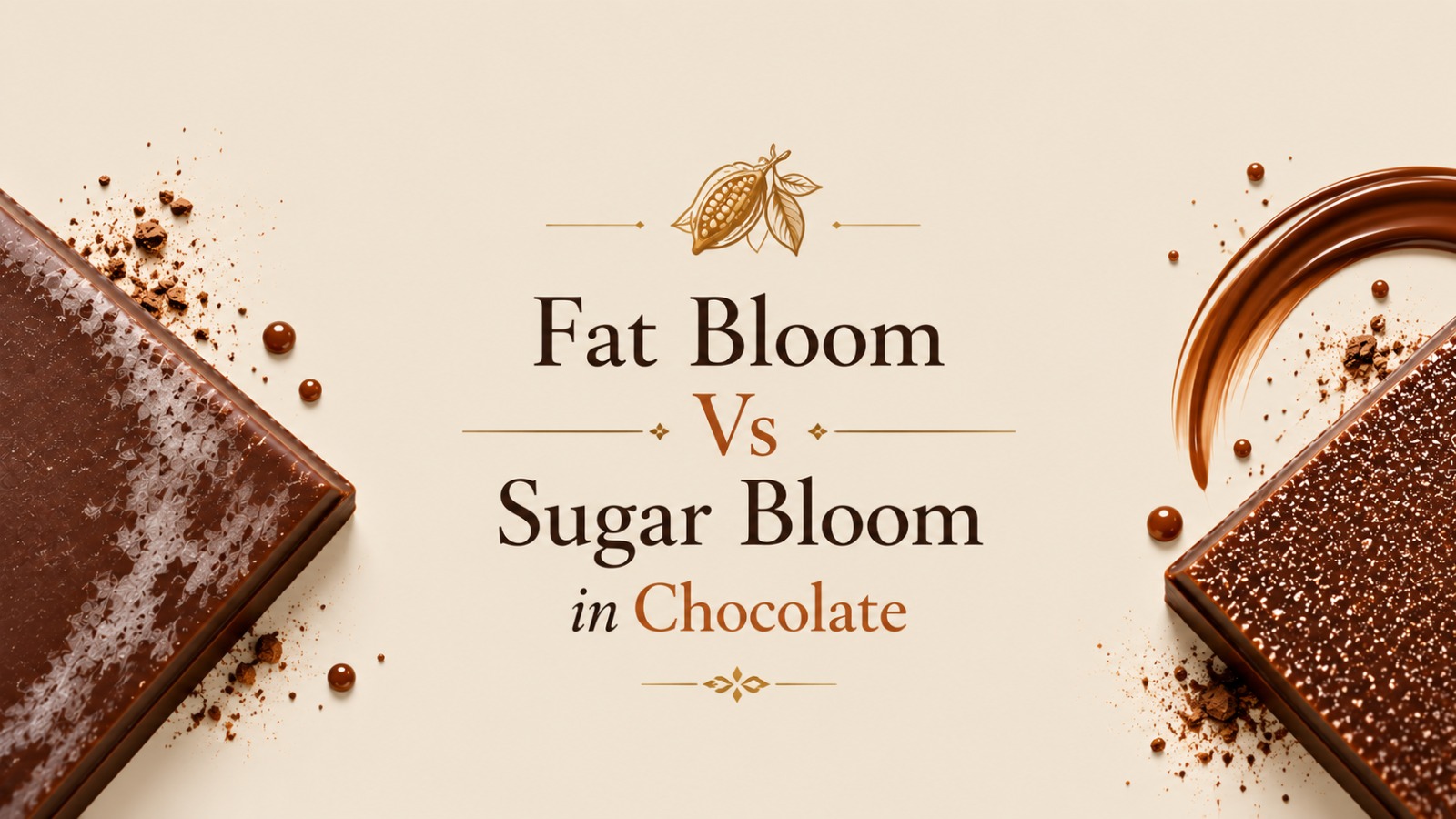
Bloom is a visible white or greyish discolouration on the surface of chocolate. It's either fat or sugar that has migrated to the surface and recrystallised — making chocolate look pale, hazy, or dusty instead of smooth and glossy. Bloom is not mould. It is not contamination. It does not make chocolate unsafe to eat.
Fat Bloom
Fat bloom occurs when stable Form V cocoa butter crystals transform into Form VI over time, or when unstable crystal forms were present from the start due to poor tempering. Liquid cocoa butter migrates to the surface and recrystallises, producing a white-grey haze.
Common causes: Poor tempering, temperature fluctuations, incompatible fats from fillings or nut oils, and extended storage.
How it looks and feels: Soft, slightly greasy whitish film. Smears when rubbed. Chocolate loses its snap and becomes slightly waxy.
Sugar Bloom
Sugar bloom is moisture-driven. When the surface is exposed to humidity, a thin film of water dissolves surface sugar. As that moisture evaporates, the sugar recrystallises in rough, irregular crystals that scatter light.
Common causes: Humidity exposure, taking cold chocolate out of the fridge into a warm room, inadequate moisture-barrier packaging.
How it looks and feels: Dry, rough, gritty, powdery texture. Does not smear when rubbed. Tastes slightly grainy.
How to Diagnose in Real Life
- Touch test: Smooth and greasy = fat bloom. Rough and sandy = sugar bloom.
- Smear test: Fat bloom smears under your thumb. Sugar bloom does not respond to pressure.
- Storage history: Came from the fridge? Suspect sugar bloom. Stored somewhere warm or made with nut filling? Suspect fat bloom.
Can Bloomed Chocolate Be Fixed?
Fat bloom: Yes — remelt and re-temper properly to restore gloss and snap. Flavour is unaffected.
Sugar bloom: Not really — the surface sugar structure is permanently altered. Still perfectly usable in ganaches, baking, or hot chocolate.
Prevention
For professionals: control tempering precisely, maintain storage at 15–18°C below 50% humidity, manage fat compatibility in filled products, and use moisture-barrier packaging.
For home users: store chocolate in a cool dry place, keep it sealed, never refrigerate unless necessary, and if you must refrigerate, let it return to room temperature while still wrapped before opening.
The Bottom Line
Bloom is a quality defect, not a safety hazard. For professionals, distinguishing fat from sugar bloom determines whether you fix your tempering process or your storage protocol. For home users — don't throw away bloomed chocolate. It's still perfectly good.
"The white on your chocolate isn't mould, and it isn't age — it's chemistry, asking to be understood."

Leave a comment
Share your thoughts, questions, or experience with this chocolate science topic.