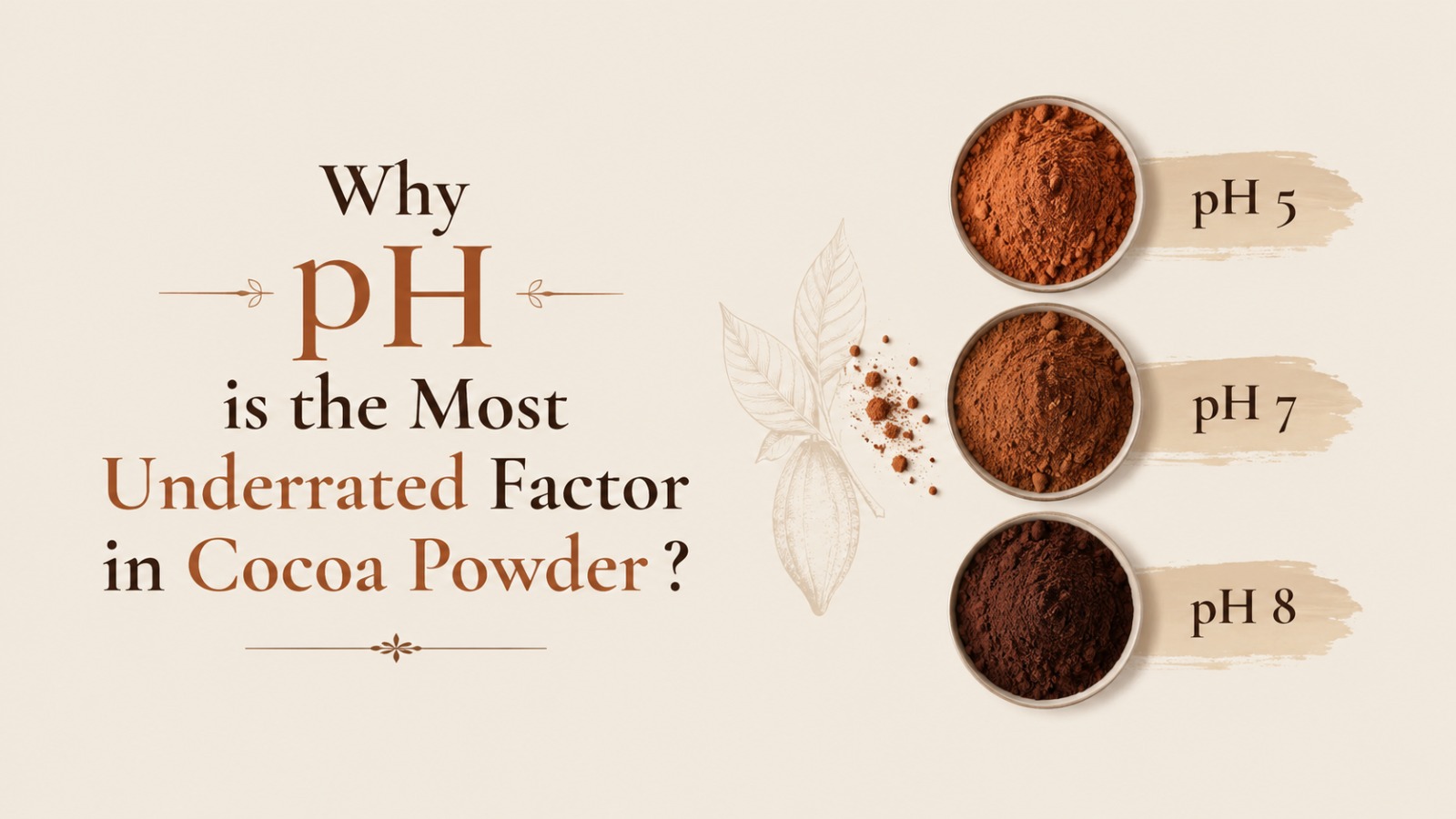
Most people pick up a packet of cocoa powder without a second thought. Dark or light. Branded or generic. But there is one number printed nowhere on the label that quietly controls everything: the colour of your ganache, the rise of your cake, the depth of your hot chocolate, and even the health benefits in every sip.
That number is pH.
Let's Start Simple: What Is pH?
pH is a scale from 0 to 14 that measures how acidic or alkaline a substance is.
Below 7 = acidic. 7 = neutral. Above 7 = alkaline.
Pure water sits at 7. Lemon juice sits around 2. Cocoa powder, depending on how it is processed, can sit anywhere between pH 5 and pH 8. That 3-point difference sounds small. In practice, it changes everything.
Why Does Cocoa Have a pH at All?
It starts at the bean. Fresh cacao beans are naturally acidic because fermentation produces acetic acid, lactic acid and other organic acids. These acids are part of what creates the fruity, complex flavour notes associated with fine chocolate.
When the beans are roasted, dried and processed into cocoa powder, much of that acidity remains. The result is natural cocoa powder: acidic, light brown and flavour-forward.
Then came Dutch processing. Cocoa is treated with an alkaline solution, commonly potassium carbonate, to neutralise those natural acids. That produces Dutch-process cocoa powder: darker, smoother and dramatically different in behaviour.
Natural Cocoa vs Dutch-Process Cocoa
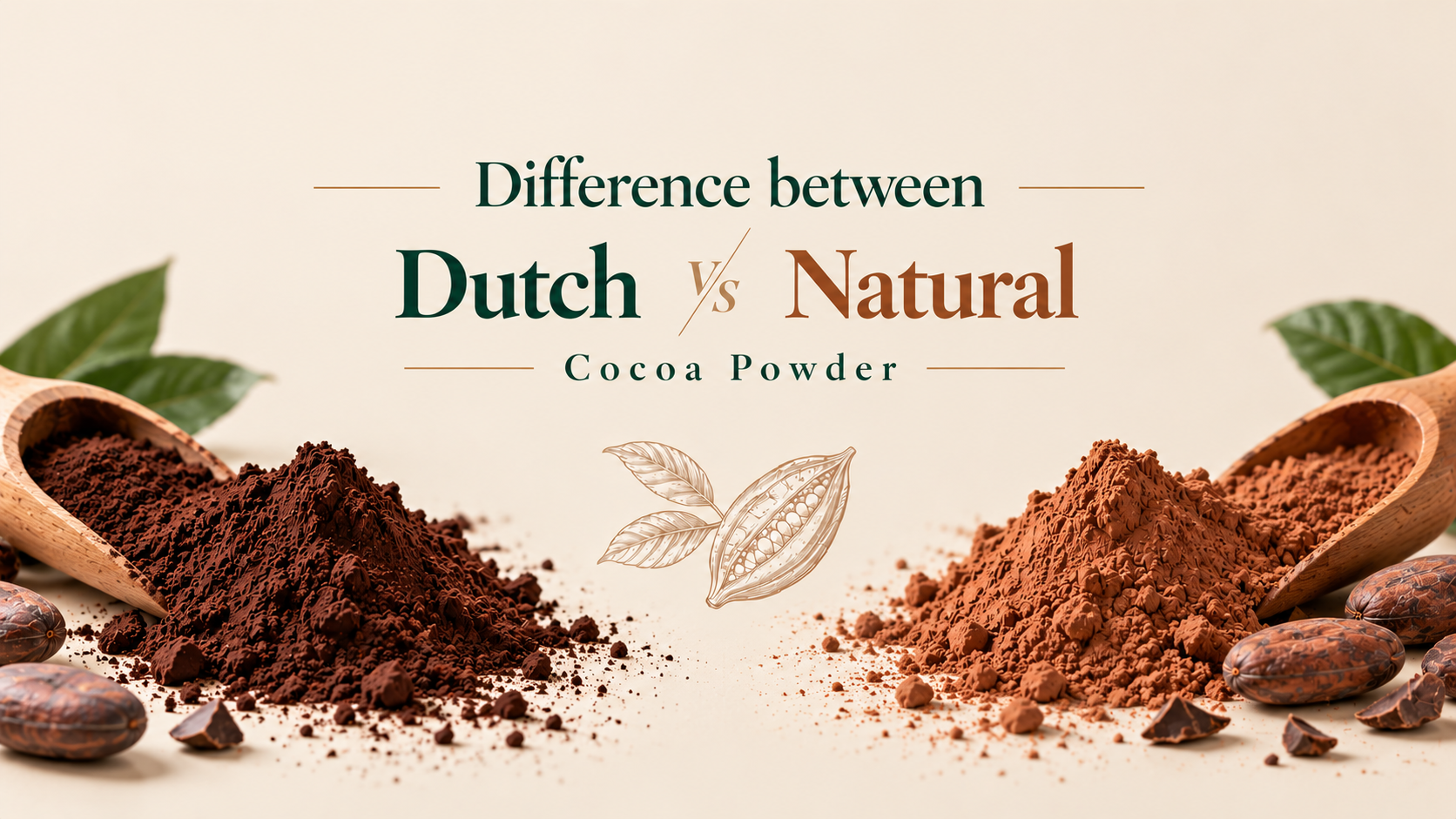
Natural cocoa powder typically sits around pH 5.0 to 6.5. It is lighter in colour, sharper in flavour and keeps more of cocoa's natural aromatic complexity.
Dutch-process cocoa powder usually sits around pH 7.0 to 8.5. It is deeper in colour, smoother in taste and less acidic.
Black cocoa pushes even further, often between pH 8.0 and 9.0. It delivers dramatic colour, but very little natural cocoa complexity.
Six Things pH Actually Controls
1. Colour. As pH rises, the pigments in cacao shift from reddish-brown to deep brown and eventually near black. This is why red velvet recipes rely on natural cocoa, and why black sandwich cookies use heavily alkalised cocoa.
2. Flavour. Acidity preserves bright top notes and fruity esters. Alkalisation smooths those edges out. Neither is inherently better, but they serve different purposes.
3. Baking chemistry. Natural cocoa is acidic and reacts with baking soda to release carbon dioxide. Dutch-process cocoa has already been neutralised, so it usually pairs with baking powder instead. Swapping them carelessly can flatten a cake or throw off texture.
4. Solubility and dispersibility. Dutch-process cocoa wets and disperses more easily in milk or water, which is why it is common in instant drinking chocolate mixes and milkshake powders.
5. Antioxidant retention. Cocoa is rich in flavanols, but alkalisation can reduce them heavily. Natural cocoa retains the most. Black cocoa retains the least.
6. Microbial stability. Cocoa powder is already low-moisture, but pH still affects how hospitable it is to spoilage organisms. In some formulations, a slightly higher pH can offer modest stability benefits.
Quick Reference
Natural cocoa: pH 5.0 to 6.5, light brown, tangy, pairs with baking soda, high flavanol retention.
Lightly Dutched: pH 6.5 to 7.5, medium brown, balanced, pairs with baking powder, moderate flavanol retention.
Dark Dutch: pH 7.5 to 8.5, deep brown, earthy and smooth, pairs with baking powder, lower flavanol retention.
Black cocoa: pH 8.5 to 9.0, near black, mild flavour, pairs with baking powder, very low flavanol retention.
What This Means for Product Development
If you are developing a cake mix, drinking chocolate, protein snack or chocolate coating, pH is not a tiny technical note. It is a formulation choice that affects colour, flavour, leavening, process behaviour and nutrition positioning.
Ask your cocoa supplier for the pH specification before you finalise a recipe. Even a small shift can visibly change the finished product and influence consumer acceptance.
The Bottom Line
pH is not just a classroom term. In cocoa powder, it is a production decision, a flavour decision, a baking science decision and a nutrition decision all at once.
Natural or Dutch. Acidic or alkaline. Bright or smooth. Light or dark. Every chocolate cake, brownie, ganache and cup of hot chocolate is shaped in part by the pH of the cocoa powder behind it.

Leave a comment
Share your thoughts, questions, or experience with this chocolate science topic.