✨ Premier Chocolate Academy & Lab

Unlocking Cacao's Science & Art

An independent Indian chocolate learning academy covering bean-to-bar craftsmanship, cacao formulation science, and professional masterclasses.

Start Learning →
INGREDIENT SPOTLIGHT

Sugar

Sugar is the sweet ingredient added to chocolate. It makes chocolate taste sweet and helps balance the natural bitterness of cocoa. It is usually added during chocolate making before the mixture is ground and mixed.

sweetness balance flavour

TRUSTED KNOWLEDGE. PROVEN EXPERIENCE.

◆
13+ YEARS
OF EXPERIENCE
THOUSANDS
OF PROFESSIONALS TRAINED
INDUSTRY
COLLABORATIONS
SCIENCE
BACKED CONTENT
INDEPENDENT
& UNBIASED
INTERACTIVE EXPERIENCE

Explore the Chocolate Table

Click any object on the artisan workbench to explore a world of chocolate knowledge, techniques, and science.
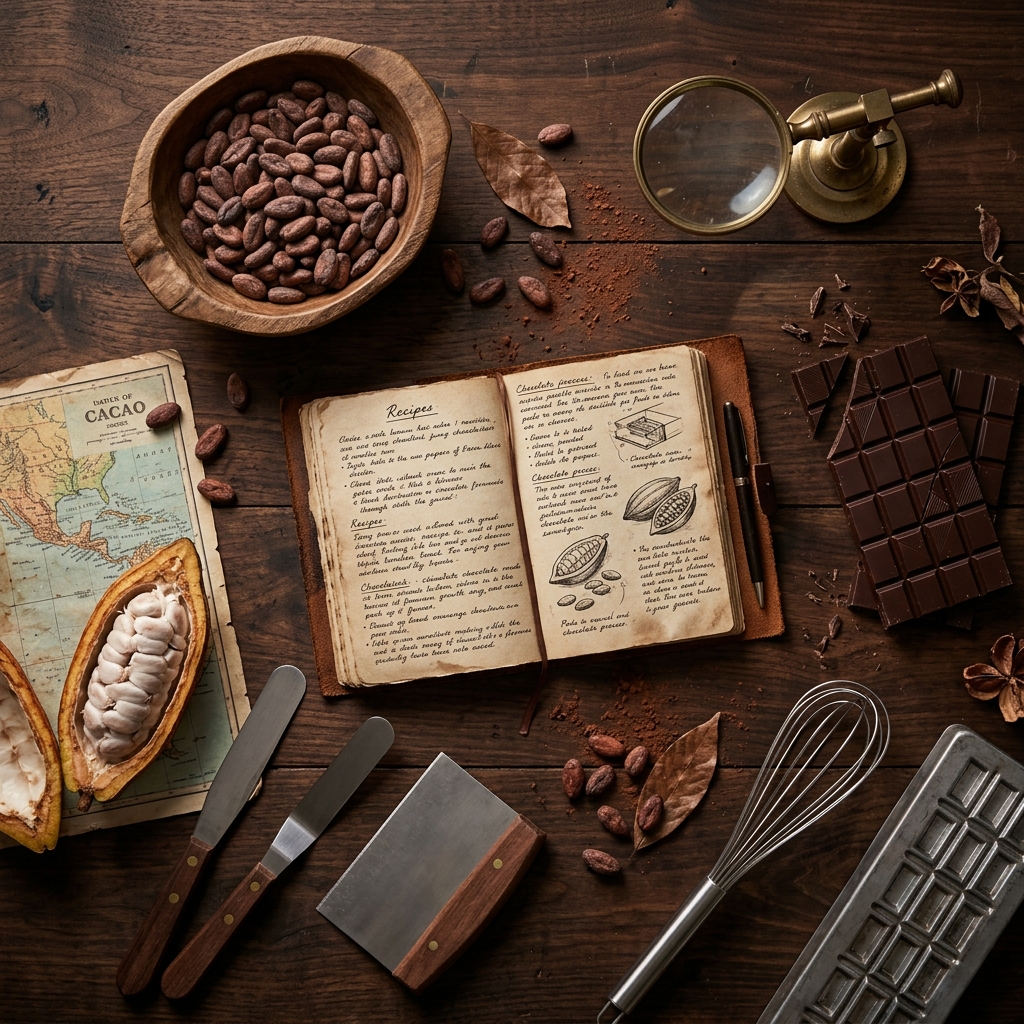
Artisan Chocolate Workbench with cocoa beans, notebook, chocolate bar, and tools
Bean to Bar
Cacao Journal
Cacao Lab
Recipes & Formulations
Work With Us
Innovation Lab
THE TEMPERING LAB • MOLECULAR CRYSTALLIZATION

Six crystals. Only one is worth having.

Cocoa butter sets into six polymorphs. Form V is the only lattice that delivers mirror gloss, crisp acoustic snap, and clean palate melt. Select a chocolate to inspect its thermal transition curve.

SELECT CHOCOLATE TYPE
50° MELT OUT
28° SEED / COOL TO
31.5° WORKING TEMP

Dark carries no milk fat, so the cocoa butter crystallises cleanly and tolerates the highest working temperature. Hold above 32.5 °C and Form V starts melting out – the bar will set dull and soft.

55° 50° 45° 40° 35° 30° 25° 20° MELT COOL WORK MELT OUT 50°C SEED 28°C WORK 31.5°C
✨ AI Live Insights
🌱 Chocolate’s perfect snap comes from precise tempering—cooling to 27°C locks stable crystals, revealing pure cocoa brilliance. 🌱 Sun‑kissed cacao beans, once sacred to Mayans, reveal their true flavor when tempered at 31°C—unlock chocolate’s timeless magic. 🌱 Roast at 42°C, cool slowly—to craft stable crystals that melt silky, turning bitter beans into pure delight. 🌱 Cacao beans contain over 600 flavor compounds, more than wine, coffee, or tea combined. 🌱 Each bean carries centuries of rainforest whispers; roast gently to unlock chocolate's hidden symphony.
02 / SENSORY LAB

The Flavor Wheel

Start with what you notice, then select any descriptor to explore its meaning, practical tasting cue, and the science behind it.

Explore a sensory note
Choose the word that comes closest to what you notice. You can return to the guide at any time.
All (15) Flavor notes (9) Taste & mouthfeel (5) Process (1)
START HERE Your tasting notebook

Begin with what you notice.

Choose any descriptor on the wheel. You can explore the science, try a small exercise, or simply continue tasting.

Try thisSmell your chocolate gently. Pause, then smell again. What comes to mind first?

Your first impression is worth recording, even if it is “nothing distinctive yet.”

Your senses are the starting point. The descriptor is a tool, not a verdict.
02 / FOLLOW THE SENSES

A tasting, one step at a time

Move through the stages at your own pace. You can skip a step, revisit it, or stay with one sensation.

Swipe to explore tasting steps
01

Prepare

Choose a small piece and a quiet space. Clear strong aromas and take a sip of water if useful.

02

Observe

Look at the surface and break. A shine or snap is a clue about physical properties, not a quality guarantee.

03

Smell

Notice the first aroma. Pause and smell again without trying to force a particular answer.

04

Taste

Let a small piece melt naturally. Notice first impression, changing flavour, texture and finish.

05

Reflect

Choose a descriptor if one helps. “I'm not sure yet” is a perfectly good observation.

STAGE 01 / PREPARE

Make space to notice.

A clean, calm environment makes it easier to notice subtle differences. There is no need to rush.

The Science of Indian Bean-to-Bar Chocolate

Welcome to RT Chocos, India's first chocolate blogging website and premier bean-to-bar learning academy. Founded by certified chocolate educator and recipe developer Aarti Saluja Sahni, RT Chocos is dedicated to demystifying the complex chemistry, tempering science, and formulation metrics behind craft chocolate making.

The chocolate landscape in India is undergoing a massive transformation. Craft chocolate makers are shifting away from mass-produced compound coatings to source single-origin organic cacao beans directly from estates in Kerala, Karnataka, and Tamil Nadu. At our academy, we believe that understanding the science of cacao fermentation, roasting thermodynamics, stone grinding (conching), and tempering curves is the key to creating award-winning artisan bars.

Whether you are a home baker wanting to learn how to temper chocolate, an entrepreneur looking to launch your own brand of Indian craft chocolate, or a hobbyist searching for authentic cocoa science resources, our blog and workshops provide the technical blueprints you need. We cover everything from pH levels in cocoa powder, FAT bloom versus SUGAR bloom diagnostics, and organic sugar alternatives, to hands-on tempering masterclasses in Mumbai and online.

Explore our professional Chocolate Academy India Workshops, browse our curated Chocolate Shop for starter kits and single-origin ingredients, or read our latest Chocolate Blog India articles to start your craft chocolate learning journey.